Geek Prepper Survival Skills when SHTF!


 Volume: Cubic Inches or Liters?
When choosing a Bug Out Backpack, I’ve noticed much confusion about the capacity of backpacks. Many packs claim the exact same capacity, but we find that one backpack holds much more gear than the other. It is somewhat confusing, more so, because the process for measuring backpack capacity has been standardized for many years.
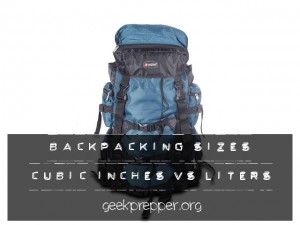
Backpack sizes cubic inches vs liters
The standard for determining the capacity of a backpack entails using 20mm plastic balls as the filler. Packs are loaded up, then emptied. The 20mm balls are then dumped into a measuring device. According to the standard, capacity measurements should not include any compartments that are not entirely sealed by zippers, such as shovel pockets, bottle holders, compression pockets, etc. We suspect that some of the overstated backpack capacities, that we see, must include the additional capacity of these pockets. This makes online backpack selection very frustrating, since we lack the ability to compare the sizes in person.
Why is that some backpacks are measured in cubic inches and some are measured in liters. Many companies state their capacities in liters, but its in no way a universal thing.
Backpack sizes cubic inches vs liters Conversions:
Metric - US
| Liters | Cubic Inches |
| 10 | 610 |
| 20 | 1200 |
| 30 | 1800 |
| 40 | 2441 |
| 50 | 3051 |
| 55 | 3356 |
| 60 | 3661 |
| 65 | 3967 |
| 70 | 4272 |
| 75 | 4577 |
| 80 | 4882 |
| 85 | 5187 |
| 90 | 5492 |
Custom Cubic Inch to Liter Calculator (or Liter to Cubic Inch)
General Sizing (in no way an exact science)
- Daypacks will be under 2,500 cubic inches or 40 liters
- Weekend packs are typically 2,500 to 4,000 cubic inches or 40 to 65 liters
- Weeklong packs range from 4,000 to 6,000 cubic inches or 65 to 95 liters
- Expedition packs are 6,000 cubic inches or 95 liters and up
Basic (rough) pack volume rules of thumb:
- 1 day trip or hike: look for something in the 40 liters range (or 2500 cubic inches)
- 1 or 2 night trip or outing (and packing light): a pack in the 50 liter range (or 3,000 cubic inches)
- Those who need more space (everything but the kitchen sink), look for a larger pack with a volume of 65 to 70 liters (or more than 4,000 cubic inches).
Some sample data to chew on:
- ALPS OutdoorZ Commander Freighter Frame Plus Pack Bag - 5250 Cubic Inches
- High Sierra 75 Liter Internal Frame Pack (Classic Series 59501 Appalachian) - 4580 cubic inches or 75 liters
- ILBE (Improved Load Bearing Equipment) - 4500 cubic inch main rucksack, can be mated with an additional 1500 cubic inch Assault Pack, along with 100 ounces of liquid in a hydration bladder. This would give you 6000 cubic inches of rucksack space, on your back. (Military Surplus)
- Kelty Trekker External Frame Pack - 3950 Cubic Inch volume
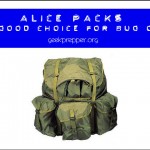
- Large ALICE pack - Main compartment 2,800 cubic inches. Total Capacity 3,800 cu.in. (Military Surplus)
- Osprey Packs Atmos 65 Backpack - 3,783 cubic inches (weighs 3 lbs 6 oz)
- Teton Sports Scout 3400 Internal Frame Backpack - 3400 Cu. In
- Medium ALICE pack - 2,350 cu. in. (Military Surplus)
This guide to Backpacking sizes cubic inches vs liters should help reduce the confusion between the sizes of backpacks, allowing you to choose the proper size.
Some of this data was taken from Choosing a Bug Out Backpack.
Cubic Inch and Liter converter script from www.unitconversion.org